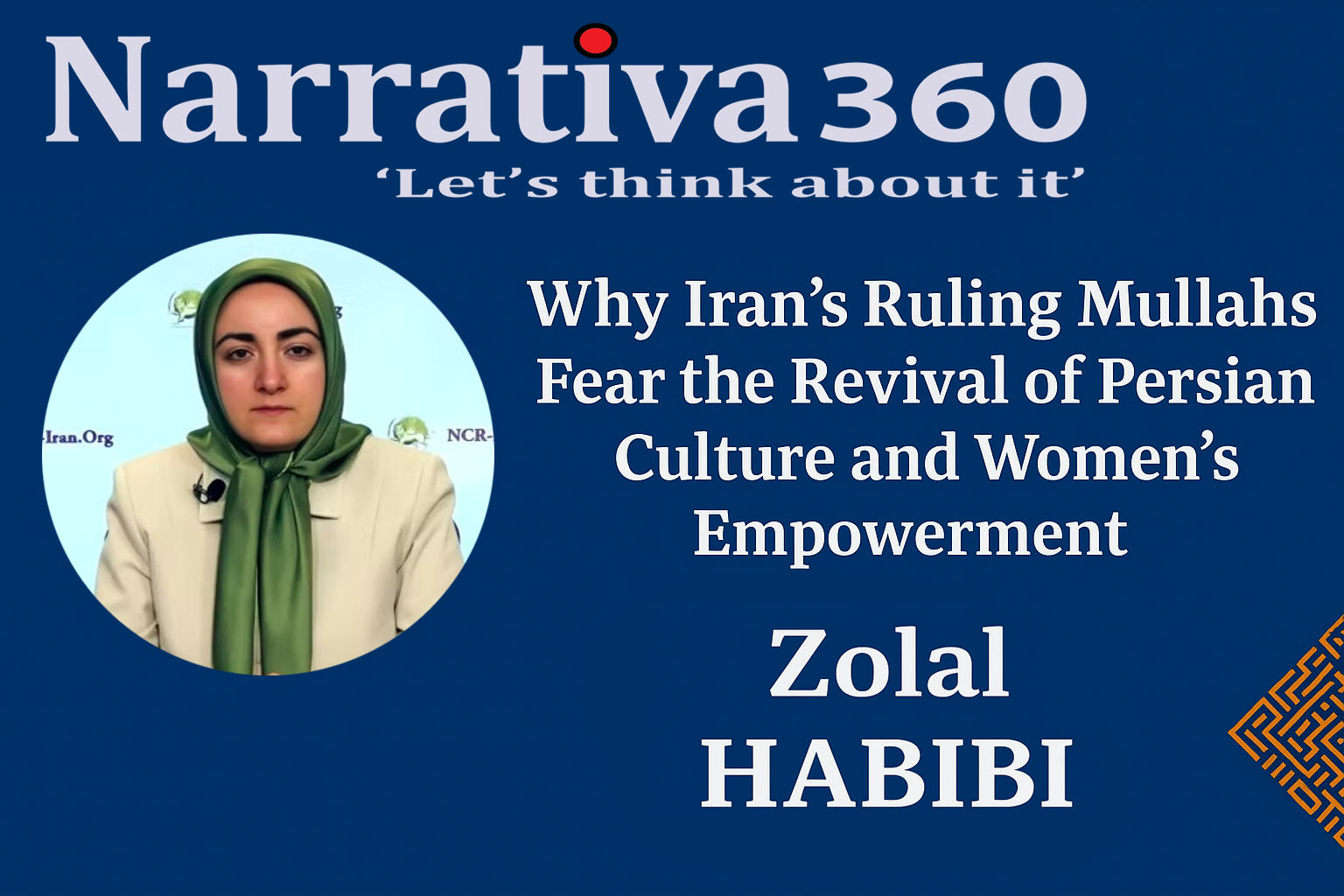
In Persian, there is a saying: “History is the light that guides the future.” This is precisely why dictatorships thrive on censorship and the distortion of history. Yet in the age of technology and social media, Iran’s youth are rediscovering their history, culture, and long legacy of struggles for freedom. They now use every tool at their disposal to defy the ruling theocracy.
Today, they take pride in knowing that the world’s first declaration of human rights is rooted in Iranian history. At the same time, they are enraged that the current regime is the greatest perpetrator of crimes against humanity, with the highest execution rate per capita in the world.
Their slogans echo Iran’s rich cultural heritage: “Khamenei, the Zahhak, we will bring you down beneath the earth!” and “The Kaveh the Blacksmith of our era is a woman!” Both draw from the Shahnameh, where Kaveh, a humble blacksmith, rose against Zahhak—a tyrannical, bloodthirsty king with two serpents growing from his shoulders. Zahhak fed the brains of two young Iranians to his serpents daily to prolong his own life. When Kaveh lost one of his sons to this cruelty, he could no longer remain silent. Crying out in the marketplace, he rallied the people to unite and overthrow the oppressor.
To outsiders, these might seem like cultural expressions. But to Iran’s ruling mullahs, they are nothing short of rebellion.
The regime’s deep-seated fear of Iran’s ancient history and culture is not just about statues and stories. It’s about identity. It’s about a nation discovering its soul after 100 years of imposed darkness. And at the heart of this revival stand Iran’s women—once silenced, now leading a movement for freedom.
The Mullahs’ War on Culture: A War on Memory
Since seizing power in 1979, the mullahs have waged war on Iran’s cultural identity. For three years, they launched the Cultural Revolution, shutting down universities throughout the country. Khomeini knew all too well that universities were bastions of freedom, and the youth who had brought about the revolution would not stay silent as it was hijacked.
They banned books, destroyed monuments, and censored art. The reason is simple: Persian culture is inherently pluralistic, tolerant, and empowering—everything the mullahs’ theocracy is not.
Figures like Cyrus the Great embody justice, human rights, and religious freedom—values enshrined in the Cyrus Cylinder, often regarded as the world’s first declaration of human rights. These ideals stand in stark contrast to the regime’s brutality, misogyny, and sectarianism.
The mullahs aim to replace Iran’s authentic heritage with a fabricated narrative in which submission to the Supreme Leader is depicted as the pinnacle of “Iranian” virtue. Yet this strategy is unravelling.
This tactic is not unique to the mullahs. The Shah, too, sought to manipulate Iran’s heritage—declaring himself “King of Kings” and claiming to be the heir of Cyrus the Great—while suppressing fundamental rights, banning books, silencing dissent, and driving society into deep economic inequality. Like the mullahs, he also invoked religion to justify his rule, claiming a ‘divine’ duty as God’s chosen representative on earth. Both regimes feared a people connected to their true history.
Why Women Are the Regime’s Primary Target
This cultural revival has a face—and more often than not, it is a woman. From Mahsa Amini, whose death ignited nationwide protests, to countless unnamed heroines leading resistance units, from Ashraf Rajavi to Fatemeh Messbah—symbols of steadfast resistance—women are at the forefront of this struggle.
The regime recognises the threat women pose. That is why its oppression of women is so ferocious. Mandatory veiling, gender apartheid, and state-sanctioned violence are tools of subjugation and degradation. Yet this strategy is failing. Every woman standing in defiance at protests and calling for society to rise, every young girl tearing down Khamenei’s portrait, every mother mourning her executed child while demanding justice—they are shaking the very foundations of the regime.
This spirit of defiance is not spontaneous. It has a precedent and a role model: a leadership shaped over four decades by women at the helm of Iran’s organised resistance.
The Resistance Movement: Keeping Iran’s Soul Alive
For decades, the organised Iranian Resistance—led by the National Council of Resistance of Iran (NCRI) and the People’s Mojahedin Organization of Iran (PMOI/MEK)—has worked tirelessly to preserve Iran’s true heritage and lay the groundwork for a free, democratic future.
Within the resistance, women have held key leadership positions for over three decades. Today, 52% of NCRI members are pioneering women. The PMOI/MEK has been headed by an all-female Central Committee; since 1989, every Secretary General of the MEK has been a woman. This is no coincidence. It reflects a deliberate vision of a democratic Iran where women lead as equals.
Maryam Rajavi, the NCRI’s President-elect, has outlined a ten-point plan that envisions gender equality, religious freedom, and the separation of religion and state—a vision deeply rooted in Iran’s pre-Islamic principles of tolerance and justice. Under her leadership, Iranian women have assumed unprecedented roles as commanders, organisers, and international advocates. They have proven that in a free Iran, women will not merely participate—they will lead.
The Impact Inside Iran: A Cultural and Political Earthquake
The regime’s panic is palpable. It bans Nowruz celebrations, arrests young women for defiance, and dispatches plainclothes agents to monitor cultural gatherings.
But repression only fuels resistance. Young Iranians are more determined than ever to reclaim their culture and future. Across all 31 provinces, underground MEK resistance units have carried out over 39,000 reported acts of defiance—graffiti campaigns, protests, and poster drives—to keep the culture of resistance alive while raising awareness and demanding regime change. Social media is flooded with content challenging the mullahs’ narrative and offering a vision of a free Iran.
This fusion of cultural pride and political activism is reshaping Iran’s landscape. It is no longer merely a fight against tyranny; it is a fight for Iran’s soul.
A Future Worth Fighting For
As an Iranian woman and member of the NCRI Foreign Affairs Committee, I have witnessed first-hand the courage of my compatriots. The mullahs fear Persian culture because it reminds Iranians of who they are—and who they can become. They fear women because, as Maryam Rajavi eloquently declared in London in 1996:
“The oppressed women of today are the victors of tomorrow. Their voices will resonate throughout eternity.”
The world must recognise that this is not merely an internal struggle. It is a historic battle between barbarism and civilisation, oppression and freedom. Supporting the Iranian people—especially its women and youth—is not just a moral obligation. It is a contribution to the birth of a new Iran:
An Iran where Cyrus’s vision of human dignity and justice is no longer a relic of the past, but a living reality for 85 million people.
Editor’s Note: The People’s Mojahedin Organization of Iran (MEK) has long been one of the most controversial forces in Iranian politics. Reviled by the clerical regime and often misunderstood abroad, the MEK—and its umbrella coalition, the National Council of Resistance of Iran (NCRI)—has nevertheless proven to be a vital vehicle for change. Established in 1981 as a democratic alternative to the theocracy, the NCRI comprises a broad coalition of Iranian opposition groups, united around the goal of establishing a secular, pluralistic, and democratic republic. For decades, the NCRI and MEK have been at the forefront of exposing the regime’s human rights abuses, organising resistance inside Iran, and advocating internationally for a free Iran. Despite relentless persecution and disinformation campaigns, they have cultivated a resilient resistance network—one increasingly led by women—that continues to shape Iran’s evolving political landscape.