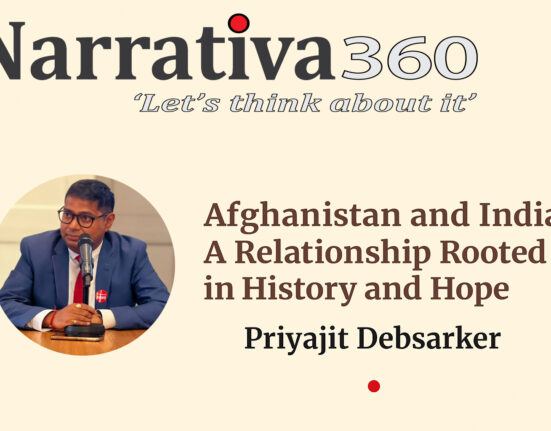

10 Questions For Priyajit Debsarker
1.) In your analysis, you highlight both the pitfalls and the immense potential for collaboration in the subcontinent. What do you believe is the single greatest barrier to achieving real regional cooperation?
It is extremely difficult to pinpoint one fundamental underlying reason for this perpetual spiral of enmity. However, if I were to pick one, it would be reconciliation, and hence a comprehensive, realistic approach to go beyond the horrors of the past and forge a new future. There are plenty of globally glorifying examples to draw inspiration from, but as the subcontinent is unequivocally unique, the solution also must be so. Accountability of the autocratic regimes in the subcontinent must be the driving factor, and the voice of the people from either side of the table must be taken into consideration. There are vested interests and deliberate obstacles that have not only been put in place but also have evolved into new barriers in the last 80-odd years. It is still my firm conviction and belief that it can be achieved. Especially when we were faced with an existential threat like the planetary pandemic (Covid-19), countries of the subcontinent almost united to combat this peril together. Hence, amalgamation is a certainty.
2.) You suggest that India’s soft power in Afghanistan hasn’t fully translated into strategic influence. What do you see as the main reason for this disconnect, and how might India address it moving forward?
Since the American withdrawal from Afghanistan, the war-ravaged country is struggling to get back on its feet. But because of the colonial attitude of the neighbourhood, especially when it comes to the deep state of Pakistani armed forces, benevolent actions are neutralised. The Afghan peace process should be Afghan-owned and Afghan-led, and nobody else should have agenda-driven programmes to exercise control of the country. India has always enjoyed tremendous local support and is seen as an eternal friend rather than an opportunist adversary. More confidence-building measures and rehabilitation-related projects, including those of infrastructure, education (including armed forces), and healthcare, hold the key for India to regain lost ground. It might be a medium- to long-term path, but certainly not a road leading to ruins and a belt of unpaid bills.
3.) You discuss the current political crossroads in Bangladesh and the risks of historical revisionism. What long-term consequences do you foresee if the pluralistic legacy of the country continues to be undermined?
Bangladesh must break free from its current trajectory of externalising its internal problems along with revenge-driven tactics and, unfortunately, pushing an anti-India narrative, which influences her policies. Rather than blame-game tactics, they must focus on the internal situation and come to a better grip of it. The interim government must take into account the broader security concerns of the neighbours, which includes constructive engagement with a natural partner and ally in the geopolitical sphere. India also has historical and cultural connections with Bangladesh, often termed the umbilical cord relationship, which cannot be severed easily. Bangladesh stands at a crossroads, and its leadership must recognise that antagonising India by undermining its own institutions will definitely not lead to progress. Instead, a pragmatic and forward-looking approach grounded in diplomatic maturity with strategic foresight can enable proactive engagement, which is essential and the need of the hour. Internal political stability, along with economic growth and the well-being of the people, depends on such an approach. Failing to do so brings to mind myriad examples from the neighbourhood—such as Sri Lanka—or even Africa, where debt-trap diplomacy has wreaked havoc on the local population.
4.) The neodymium export ban by China poses a challenge for India’s tech ambitions. Do you see realistic prospects for India to develop its own supply chain for critical minerals, or will dependence on China persist?
It is going to be bumpy and difficult in the short run. However, as India holds a significant share of the global rare earth mineral deposits, it is only a matter of time before the technology and capacity not only to harvest but to process these rare earths becomes a compelling driving factor of the economy. India, by doing so, will not only cater to internal demands but can also establish itself as a credible alternative so the world is not held at ransom by one specific regime.
5.) In your conclusion, you advocate for confidence-building measures post-Operation Sindoor. Can you suggest one practical initiative that could help thaw India-Pakistan relations in the near future?
It has to be made abundantly clear that cross-border terrorism and the execution of innocent civilians, especially based on their caste, religion, or creed, is not only unacceptable in today’s age, but it will also attract a cost for the deep state if they wish to propagate their doctrine of bleeding India through a thousand cuts. As long as the Pakistan Army has a country to itself and a disproportionate allocation of the country’s resources, they will call the shots and be in the driving seat. Only a popular democratic dispensation can be the solution. Pakistan calls Kashmir an unsettled agenda of the bifurcation, or rather trifurcation, of the Indian subcontinent and refers to it as the jugular vein. Perhaps it is the right time for that blocked vein to undergo a completely new bypass surgical procedure.
6.) Much of your work has focused on the 1971 genocide in Bangladesh. What initially drew you to this subject, and why do you feel it remains important for the world today?
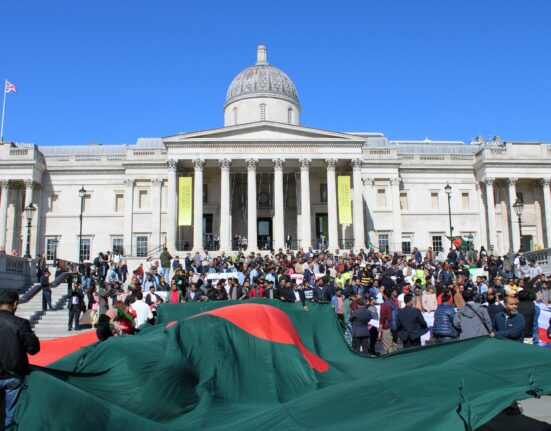
I was always attracted and fascinated by the huge amounts of unreported facts of the subcontinent and the neighbourhood, as there are huge gaps and gorges to bridge. In London during the popular 2013 Shahbagh protests—widespread demonstrations held in Bangladesh—I was drawn to the finer forgotten facts of the 1971 Liberation War. What happens today or potentially in the future will have a connection to the past. As long as we shield and insulate ourselves from that past, it will add to obscurity and opaqueness. It is absolutely critical and vital we keep an open mind and introspect on both triumphs and, even more so, tragedies.
7.) How has your research on the Bangladesh genocide shaped your understanding of contemporary South Asian politics and identity?
The story of the Bangladesh 1971 Liberation War, in my opinion, is almost missing from the Western narrative and geopolitical discourse. It is rather shocking—the lack of awareness about one of the largest genocides, the violation of women and children, and the highest number of troops surrendered post-Second World War. The amount of work to be done is phenomenal, as we must try to ensure justice is served for the millions who paid the ultimate price in the creation of Bangladesh. We have to become the voice of the voiceless.
8.) As both an author and a geopolitical analyst, what motivated you to begin writing about international affairs and political history?
It began as a passion and hobby initially. However, as time progressed, I started receiving requests from reputable platforms for opinions, and it was an evolving process. These landmark publications provided me with the necessary infrastructure to continue with my work, and I am thankful to every one of them for the faith they had in a novice.
9.) Your columns have appeared in major outlets across several countries. How do you approach making complex subcontinental issues accessible to a global audience?
This is quite interesting and tricky, more like a complex collage of juggling. Depending on the region and the theme behind the publication, some adaptations need to be made. However, I strive to make no compromise on the core content, as that is the critical cornerstone. It is also sometimes challenging due to various time zones and tight deadlines.
10.) Looking back at your career, is there a particular story or moment that stands out as a turning point in your journey as a writer and analyst?
My first book, “The Last Raja of West Pakistan,” based on the 1971 Liberation War, was covered by the BBC in England, which really catapulted my journey. It was by a rather lucky stroke that someone in that organisation got a copy and was quite intrigued, which led to the interview. It was indeed a very sweet memory that I always love and cherish—something very close to my heart.