In recent years, the term “woke” (or more broadly cancel culture*) has evolved from a niche expression of social awareness to a cultural juggernaut, shaping discourse, policy, and institutions across the globe- becoming an arbiter of free speech, that rules with an imperative absolutism tautologically wielded to tackle differing opinions. While its proponents champion it as a movement for justice and inclusion, a closer examination reveals a troubling trend: the woke agenda, in its zeal for ideological purity, is undermining the very foundation of human rights—those hard-won principles of individual liberty, free expression, and equality under the law.
This article argues that the woke movement, despite its stated goals, risks eroding these universal rights through dogmatic overreach, selective enforcement, and a redefinition of fairness that prioritises group identity over individual dignity.
The Roots of Human Rights
To understand the tension, we must first define human rights. These are the principles enshrined in documents like the Universal Declaration of Human Rights (1948), the U.S. Constitution, and other democratic frameworks. They include freedom of speech, the right to due process, equality before the law, and the protection of individual autonomy. These rights emerged from centuries of struggle against tyranny, oppression, and arbitrary power. They are universal, applying to all individuals regardless of race, gender, or creed, and are designed to safeguard personal agency against the encroachments of both state and societal forces.
The woke agenda, by contrast, often frames itself as an extension of these rights, seeking to address systemic inequalities and historical injustices. However, its methods—rooted in collectivist ideologies and moral absolutism—frequently clash with the individual-centric ethos of legacy rights. The result is a paradox: a movement claiming to advance justice is, in practice, compromising the principles that make justice possible.
The Erosion of Free Speech
One of the most glaring casualties of the woke agenda is freedom of speech. Historically, free expression has been the bedrock of social progress, allowing marginalised voices to challenge entrenched power. Yet, the so-called woke movement has increasingly embraced censorship, both overt and subtle, to silence dissent. Terms like “hate speech” and “harmful content” are wielded as weapons to suppress ideas that deviate from the prevailing orthodoxy. Social media platforms, universities, and workplaces have adopted speech codes and de-platforming policies, often under pressure from activist groups, pandering and appeasing those who are the antithesis of the free-thinking society their virtues espouse.
In a way, the reasoning behind this quasi-censorship is justified: words can cause harm, and protecting vulnerable groups justifies restrictions, and nobody disputes this. But at the same time such logic falters under scrutiny. Who decides what constitutes harm? The subjective nature of offense risks vesting power in the loudest or most connected groups, creating a hierarchy where certain voices are privileged over others. Nobody is arguing that speech is not without offence, yet there will always be speech which, whatever side you stand, somebody will take offence, will disagree – yet with the emergence of Woke we have forgotten the necessity within society to have tolerance for differing opinions, and to have tolerance for the tides of change – both societally but also ideologically. We must have the right to say what we wish and someone will always have the right to take offence but this not mean one should not be free to speak out. Moreover, silencing dissent stifles the very debate needed to refine ideas and expose flaws. The case of J.K. Rowling, vilified for her views on biological sex, illustrates this. Despite her reasoned arguments, she faced relentless campaigns to “cancel” her, demonstrating how the woke agenda prioritises ideological conformity over open discourse, I too have faced similar de-platforming and attempts to damage my reputation for espousing an opinion.
Legacy human rights demand that all individuals, regardless of their views, have the right to speak and be heard. By undermining this, the woke movement not only betrays its own claims to inclusivity but also weakens the mechanism by which societies correct course.
The Subversion of Due Process
Another pillar of legacy human rights under siege is due process—the principle that individuals are innocent until proven guilty and entitled to a fair hearing. The woke agenda, with its emphasis on “believing victims” and swift justice, has eroded this safeguard. In high-profile cases, from campus tribunals to corporate firings, accusations alone have sufficed to ruin reputations and livelihoods. The #MeToo movement, while exposing real abuses, also revealed the dangers of bypassing due process. Men like Aziz Ansari faced public shaming for alleged misconduct that, upon closer examination, often fell into grey areas of human interaction.
In his book ‘The End of Woke: How the Culture War Went Too Far and What to Expect from the Counter-Revolution’, Andrew Doyle argues that the ‘woke’ movement, despite claiming to champion progressive values, has become intolerant, illiberal, and authoritarian, undermining the very principles of liberalism it purports to uphold. He contends that wokeness is not an extension of liberalism but its antithesis, demanding ideological conformity over free expression and rational debate. Doyle highlights how both the woke left and the emerging anti-woke right both risk adopting authoritarian tactics, such as censorship, which erode freedoms and human rights, including free speech and individual autonomy. He emphasises that true liberalism—rooted in Enlightenment values like free expression, diversity of views, and civil liberties—offers a principled alternative to resolve the culture wars. By resisting authoritarianism from all sides, Doyle argues, society can protect human rights and restore a commitment to open dialogue and mutual tolerance.
This trend stems from a well-intentioned desire to address power imbalances, particularly for historically marginalised groups. But dispensing with due process creates a new form of injustice. Without evidence, cross-examination, or the right to defence, accusations become convictions, and mob sentiment replaces reason. This not only harms the accused but also undermines trust in institutions, as fairness is sacrificed for expediency.
Legacy human rights insist on procedural justice precisely because power can corrupt, and emotions can cloud judgement. By side-lining due process, the woke agenda risks replicating the arbitrary punishments it claims to oppose.
Redefining Equality
Perhaps the most insidious threat is the woke movement’s redefinition of equality. Legacy human rights emphasise equality under the law—treating individuals as equals regardless of group identity. The woke agenda, however, often advocates for equity, which seeks equal outcomes across groups. This shift, while appealing in its aim to correct disparities, introduces a framework where individuals are judged not by their actions but by their group membership.
Affirmative action policies, diversity quotas, and reparative measures are examples of this approach. While designed to address systemic inequities, they can violate the principle of meritocracy and fairness. When individuals are promoted or excluded based on race, gender, or other markers, the result is a new form of discrimination, alienating those who feel unfairly penalised for factors beyond their control. Studies, such as those by sociologist John McWhorter, highlight how such policies can foster resentment and reinforce stereotypes, undermining social cohesion.
Moreover, the focus on group identity over individual character risks entrenching division. Legacy human rights sought to transcend tribalism, uniting humanity under shared principles. The woke agenda, by contrast, often amplifies group grievances, framing society as a zero-sum struggle between oppressors and oppressed. This world view not only fuels polarisation but also distracts from universal issues like poverty or access to education, which cut across identity lines.
The Path Forward
Critics of this argument may contend that the woke agenda is a necessary corrective to centuries of injustice, and that legacy human rights have failed to deliver true equality. There is truth to this: systemic barriers persist, and vigilance is needed to ensure rights are upheld for all. But the solution lies not in dismantling the principles that have driven progress but in strengthening them. Free speech must be defended to allow honest debate about solutions. Due process must be upheld to ensure justice is fair, not vengeful – and equality under the law must remain the goal, uniting rather than dividing.
The woke agenda’s passion for change is not inherently wrong, but its methods are dangerously short-sighted. By prioritising ideological purity over universal principles, it risks creating a society where rights are contingent on group allegiance, not inherent to the individual. This is not progress but regression—a return to the tribalism and arbitrary power that legacy human rights were designed to overcome.
To preserve these rights, we must reject dogma and embrace reason. This means challenging woke overreach with arguments, not outrage, and advocating for policies that uphold individual dignity. Only by recommitting to the principles of liberty, fairness, and equality can we build a future that honours the struggles of the past while addressing the challenges of today. The woke agenda may claim to speak for justice, but without legacy human rights as its foundation, it risks becoming the very oppression it seeks to dismantle.
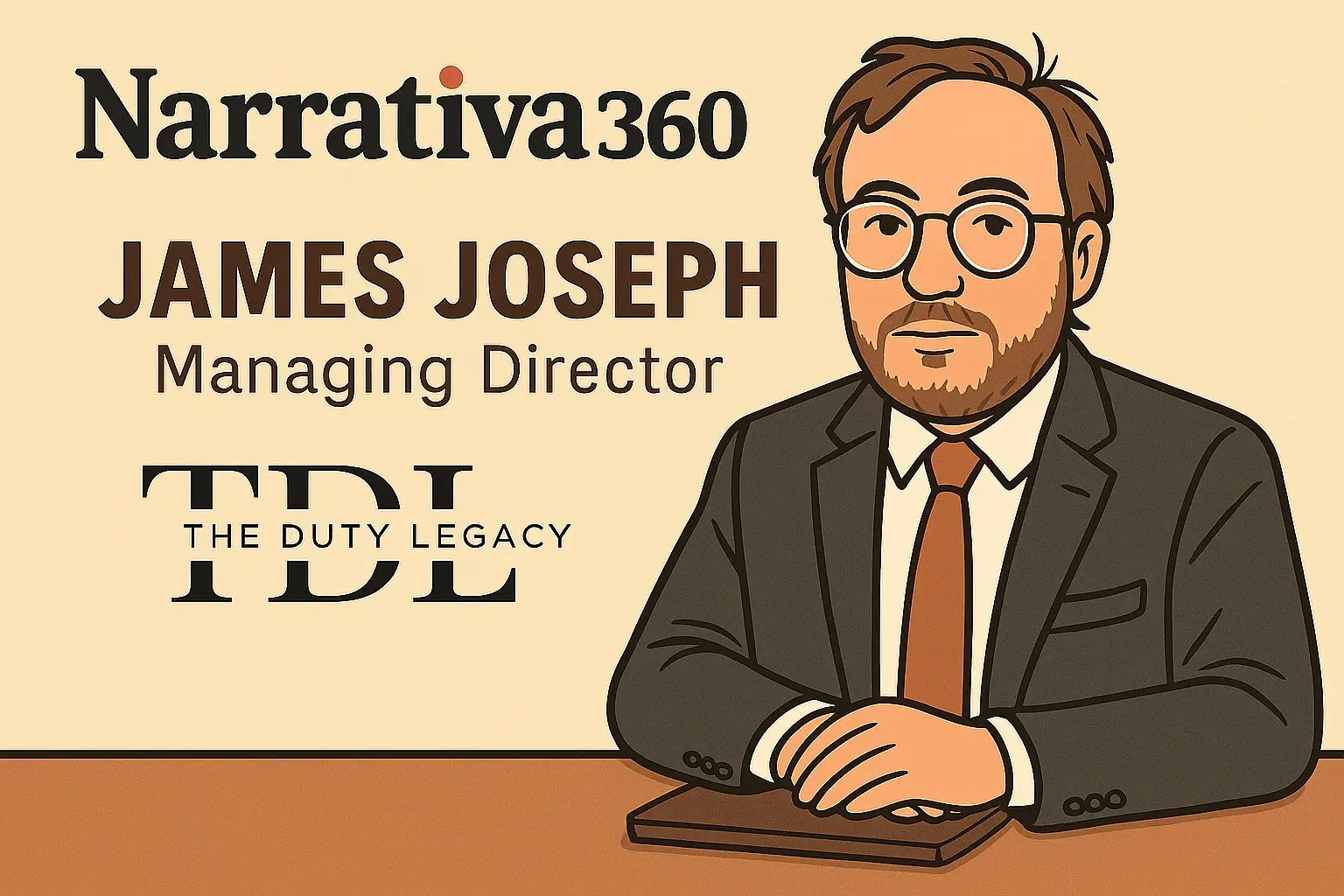
Learn about the Author: James Joseph