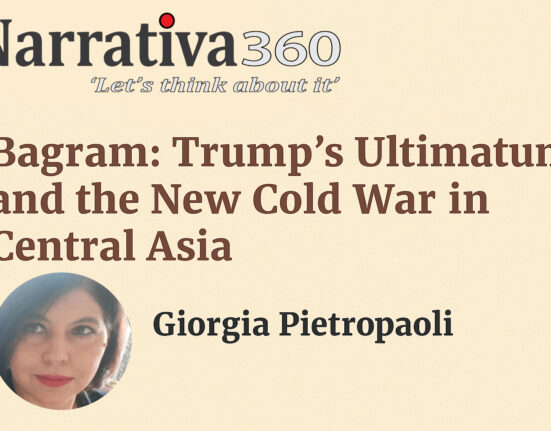
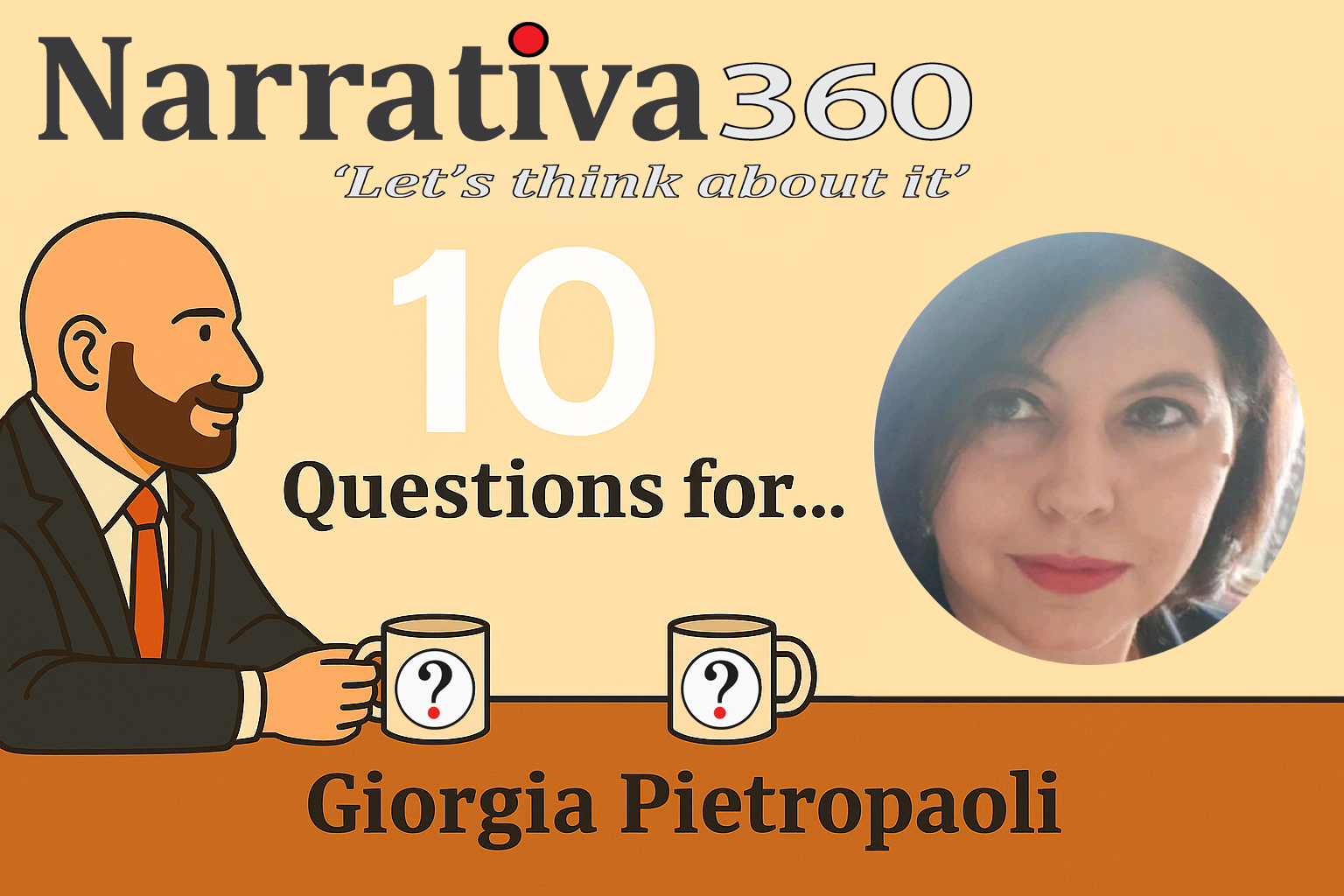
10 Questions for…Giorgia Pietropaoli
1.) Your essay is titled “Words as Bullets.” When did you first realise the destructive power of language in politics?
The first time I truly grasped the destructive power of language in politics was during a debate. Instead of discussing the issue at hand, the participants used polarising terms, creating a stark contrast between “us” and “them.” For instance, one side would call themselves “patriotic,” labelling the other as “traitorous.” This Manichean dualism, which divided the world into “good” and “evil,” prevented any constructive discussion and turned the debate into a conflict. It was in that moment that I realised words aren’t just tools for communication; they can be wielded as weapons to annihilate an opponent.
2.) You write that “politics has descended into a media circus.” How much do you think social media has accelerated this decline?
Social media has both amplified and fragmented political discourse. Complex debates are reduced to catchy slogans, memes, and short viral videos, sacrificing depth for brevity. Politicians are no longer judged solely on their ideas but also on their ability to create content that generates engagement, like likes and shares. The focus shifts from critical analysis to emotional and knee-jerk reactions, transforming politics into a spectacle rather than a serious debate about society’s problems.
3.) You cite the Latin maxim verba volant, scripta manent. Do you think we’ve lost a sense of the permanence of words?
We have largely lost the sense of permanence of words. The digital environment has upended the meaning of the Latin phrase, “verba volant, scripta manent.” In the age of the internet, written words are no longer etched in stone; they can be copied, edited, and endlessly disseminated, often losing their original meaning. A tweet or a comment can be taken out of context, misunderstood, and become the target of fierce criticism. This online fluidity diminishes the authority of the word, while a digital culture obsessed with immediacy makes yesterday’s words quickly obsolete. As a result, words are no longer seen as solemn declarations but as fleeting expressions. This fluidity, while allowing for unprecedented dissemination, diminishes both the permanence and authority of the word.
4.) Some argue that harsh rhetoric is just “part of the game” in politics. What do you say to that?
While a certain amount of confrontation is part of democratic debate, the systematic use of harsh rhetoric has negative consequences. It’s crucial to distinguish between a spirited debate about ideas and a personal attack. The former can be constructive and helpful in clarifying the differences between various political positions. The latter, however, aims to delegitimize the opponent, often using insults, slander, and innuendo. This rhetoric can polarize the electorate, pushing people to retreat into ideological “bubbles” where dialogue with those who think differently becomes impossible. Secondly, it can discourage honest and capable people from entering politics, as they don’t want to be subjected to personal attacks and insults. Finally, it can undermine trust in democratic institutions, as the impression that politics is a low-stakes game rather than a service to the community can lead to widespread disaffection. Many politicians use this tactic to mobilize their base, but in the long run, it poisons the political climate. Confusing harsh rhetoric with debate is detrimental to democracy.
5.) How do you see this playing out in democratic institutions?
In my opinion, a harsh rhetoric, which focuses on personal attacks rather than the clash of ideas, undermines the ability of institutions to find compromise. Too often, parliamentary dialogue, which should be a place of exchange, turns into a series of monologues and accusations, making it more difficult to pass laws and reforms. Collaboration between opposing parties, a pillar of many democracies, is seen as a betrayal rather than an act of responsibility.
6.) You have studied Persian literature and Middle Eastern politics. How has that shaped your understanding of language and power?
My studies have convinced me that the control of language, whether through political coercion or literary skill, is a fundamental form of power. It is the power to name, define, remember, and forget. In the Middle East, language is inextricably linked to power. The history of the region, marked by empires, colonialism, and ongoing political conflicts, demonstrates how linguistic choices can assert dominance or challenge authority, as in the case of minority languages’ resistance (i.e. Kurdish). A government’s decision on which language to use in its institutions is a political act with enormous consequences. . Persian literature, poetry in particular, offers several lessons: the ambiguity of language allowed poets to express dissent and philosophical truths without direct persecution. Furthermore, epic narratives like the Shahnameh helped build a national identity and a historical consciousness, showing how stories can shape how people see themselves and the world. The beauty of language becomes a shield that protects complex and potentially dangerous ideas.
7.) You mention Iran and Afghanistan as areas of focus. Do you see parallels between political language there and in Western democracies?
We can see significant parallels between the political language used in Iran and Afghanistan and the increasingly common rhetoric in Western democracies. Despite the differences in political systems, the rhetorical strategies are similar, particularly in the use of populism, appeals to identity, and the creation of “enemies.” A central theme in the rhetoric is the creation of a conflictual relationship between “the people” and “the elite.” In Iran, revolutionary rhetoric framed the struggle as that of the oppressed masses against the corrupt, westernized elites. Similarly, the Taliban portray themselves as the authentic voice of the Afghan people opposing the pro-Western elites. This same narrative pattern is also widespread in Western populist movements.
8.) As a teacher of classical literature, what lessons from the ancients do you wish today’s politicians would heed?
As a classical literature teacher, I wish today’s politicians would heed the lessons of the ancients on the art of rhetoric, the dangers of hubris, and the importance of civic virtue. Many politicians today rely almost exclusively on pathos, or emotional appeals and simple slogans. I hope they would rediscover the importance of ‘ethos’ and ‘logos’. A leader’s credibility and the logical coherence of their arguments are fundamental to building trust. The goal should be persuasion through reasoned debate, not deception through emotional manipulation. Greek tragedies warn against excessive pride (hybris), showing how a ruler’s refusal to admit their flaws leads to ruin. Finally, the Romans emphasized civic virtue, which is putting the common good before personal interests. Unlike today, where politics is seen as a path to power and celebrity, the lesson is that a healthy republic depends on leaders willing to sacrifice themselves for the collective good.
9.) Your next book is an investigative essay on Afghanistan. Will it also touch on the role of words and narratives?
Yes, my investigative essay on Afghanistan will touch on the role of words and narratives. It is impossible to understand the country’s recent history without analyzing the competing narratives that have shaped it. The struggle for power in Afghanistan is a battle of narratives. The Taliban’s political language, for example, frames their rule as a return to an authentic Islamic tradition, while the previous, Western-backed government used a narrative based on democracy, progress, and human rights. Each group uses language to legitimize its authority and delegitimize its rivals. Afghan political discourse is also deeply influenced by ethnic and political divisions, and politicians use ethno-linguistic identities to mobilize support and create a sense of collective injustice.
10.) Finally, if you could give one piece of advice to politicians worldwide, what would it be?
If I could give one piece of advice to politicians worldwide, it would be to prioritize truth over narrative. In the current media landscape, there’s a strong temptation to turn every message into a simple, emotional story, even at the cost of accuracy. This leads to focusing on appealing to a narrow electorate rather than governing for the good of all citizens. The long-term consequence is the erosion of trust in democratic institutions and a deeply polarized society. Adhering to the truth, even when it’s complex or inconvenient, is the foundation of a healthy democracy. It allows for genuine debate and builds the trust necessary for society to function. By choosing truth, politicians can move beyond the media circus and focus on the serious work of effective governance.